Showing posts with label public health. Show all posts

Saturday, 20 May 2017

If I were Prime Minister for a day

We had a funny conversation while driving along. It was if I were Prime Minister for a day - what would I do.  I thought it could be fun to mention here.  Here goes.
Sugar tax
Yep, I'd bring this in properly and not just for fizzy drinks.  I'd include all kinds of chocolate, sweets and the like.  While I'm at it, I'd have a good look at McDonalds, KFC and so on.  Why?  Because KFC = Keep Fat & Chubby.  Feeding such crap to your kids could be described as child abuse.
Alcohol
The Government has previously missed a trick with not introducing minimum alcohol pricing, although perhaps Scotland might have had the foresight to do this.  Considering the immense harm to people's physical and mental health through excessive alcohol, there is a strong case for this.  Add the misery caused by drunk people getting into fights, domestic abuse and general rowdiness, I think a significant hike in price is valid.  Although I am loathed to agree very much with David Cameron, I think he was right in wanting to create a cafe culture to replace a pub culture.
Tobacco
You can probably predict what I'm going to say here.  Double the tax on cigarettes now.
Transforming Rehabilitation
I would order the Ministry of Justice to undo all of the harm Chris Graying has done to the justice system and probably sack him by the time I have my morning coffee break.  I think also I'd look to change sentencing policy so the prison population can come down and invest the money saved in rehabilitation.
Whitehall
While I'm at it, I would transfer much of Whitehall out into the regions i.e. moving the power from central London closer to where it is needed.  So sorry Sir Humphrey, your days are numbered.
Freedom of speech, political correctness
It saddens me when I hear of street preachers getting into trouble for preaching.  This has to change.
The unborn children
Far too many babies are aborted for very dubious reasons.  There is a fine line between medical need and murder.  Apparently in 2015 there were 185,000 abortions in England and Wales.  Something has to be done about it.
Range Rovers and other high performance cars
Sorry folks, your days are also numbered unless you're willing to pay through the nose for your gas guzzlers and status symbols.  While you're doing this everyone will think you have more money than sense. I think I'd do this through VAT in purchasing the car in the first place and then the annual road tax.  If it costs £500 a year to keep a Range Rover taxed, well I'd make it £5,000.  As for cars with blacked out windows, you have it coming as well.
Private education
As someone who has put his own children through a private school, you might be surprised to know I would charge VAT on the fees but introduce it over a period of years.
Cycling
It will come as little surprise that I'd spend more money on making life easier for the cyclist who, in the UK, puts up with a lot.  Dreadful roads, poor junction layouts, potholes, few cycle lanes and the list goes on.

Sunday, 2 August 2015

Catching up with myself: health checks

Yet again time flies and blogging gets left behind.  So here's a quiet Sunday morning and my favourite time in the week.  My family are slumbering upstairs, I'm sitting at the dining room table having emptied the dishwasher from its overnight run, laid out everything we need for breakfast, brewed some (decaf) coffee and sitting down with my Mac.  Here goes.

Health checks

Left eye, July 2015
Right eye, July 2015
As you know I always like to make sure my body is in tip top condition.  I ensure I have an annual check at the Doctor's surgery covering blood pressure, cholesterol, liver function, kidney function, PSA levels and so on.  That's always okay.  At the dentist I quite often get caught with a little decay or something needing attention on an x-ray.  And then I go to the optician as well.

It is always interesting at the opticians as I can tell my eyes are deteriorating in terms of becoming longer sighted.  I still hate the time when I was told, in my mid forties "well you're middle-aged now, most people become long sited and need glasses.  You're no different".  So I have glasses for reading and using a computer - for that reason my employer kindly allows me to claim £15 for an annual test and £40 towards the cost of glasses.

This check up revealed I needed slightly stronger lenses owing to continuing to become more long sighted.  "This is all fairly routine" explains the optician every year.  She went onto explain that if I follow the normal pattern my long-sited vision will level out soon and not change too much of the rest of my life.  That sounds good as I do need my glasses more and more for anything under one metre and also to expect things to be in focus.

There are always two things which provide interest to the conversation.  Firstly she says "what lovely blood vessels you have at the back of your eyes Doug".  No sign of diabetes or anything like that.  You had better keep up your veggie diet and keep running.

Secondly she's always interested in the dark patch in my left eye.  Actually it is more textured in real life than the photo shows.  This is a Central Serous Retinopathy and this is a tiny leak causing the retina to bulge and this leads to distorted vision.  It has been there for many years and comes and goes a little.  It also features a little in my right eye, although considerably less.  Apparently there are further signs of this happening away from the centre of my vision but I'm less aware of this.  The long term effect of this is to deprive the retina with certain nutrients and my vision has become dull and the world appears as if viewed from a bit of grey, uneven glass.

On a positive note, my brain adapts and this is an example of our wonderfully designed bodies.  I tend to see more from my right eye, so I hope this eye doesn't deteriorate any further.

You might wonder what causes this.  Well, Central Serous Retinopathy is still a bit of a mystery to the medical profession.  It does appear to affect men more than women and the age group is generally 30 - 50 years.  Men who suffer from a Central Serous Retinopathy are often high achievers, high flyers.  Additionally they expect a lot of themselves and put themselves under a lot of pressure.  In other words these are Type A personality traits.  Now I am NOT a high flyer but I do expect a lot of myself.  I am, perhaps, my hardest critic and often known to give myself a hard time over some things.

As a release from this, I find so much solace in my faith (I'm a Christian) and of course running has a brilliant effect on me.  Although I became a runner about eight years ago and at a time of considerable stress, I do find this helps me deal with the challenges of life, especially my work.  Having faith and becoming a runner doesn't solve everything but they are brilliant ways of accepting situations and thinking them through.  I digress.

Back to health checks.  These are so important and I'm pleased those public health folk take it seriously and the Government fund it.  It always amazes me how some people spend far more time and money on maintaining their cars than their own bodies.  Cars are expensive things, sure.  Cars are also very transitory objects and unimportant in the great scheme of things - having a nice car won't allow you to live a minute longer or be a better person.  Taking the time and trouble to have regular health checks at the doctor, dentist and optician is a great way of spotting any problems as they emerge and as we should all know, early diagnosis is very important.  Also important are steps which can prevent illnesses in the first place.

So there you are.  Make sure you get a check-up once a year, especially if you are anywhere near the dreaded "middle age".

Related
Type A personality tag
Staying active in old age


Sunday, 3 May 2015

MK Marathon countdown

This time tomorrow I will be nervously having my breakfast before setting off to Milton Keynes for the marathon.  This is the third time I will have completed this race and, as I have such good memories, I am really looking forward to it.

In getting the negatives out of the way, I am still being dogged by an annoying injury which probably ranks amongst the most avoidable injuries a runner could get.  I have a dose of shin-splints.  This is tenderness and some pain on the front of my shin bone (where various tendons join the bone).  I put this down to over-use.  The second injury (same leg) is one of the calf muscles is sore and has been for a few weeks.  Lately I have been having some short runs of only a few miles in order to remain supple but not to aggravate anything.

The solution to all of this is taking some Ibuprofen on the day and continued gently stretching, which does seem to be helping.  Having said that, I am prepared to pull out on the day if it's too painful and right now I'm thinking this could be a possibility, although this is something I have never done before.  Even if the race goes well, I dare say I will hobble around afterwards and it does seem to be affecting my hip after a run.  All this is another reminder of how fantastic our bodies are in terms of the complex design and how everything works together but we aren't made to carry on forever.

My checklist:

  • Race number
  • Safety pins x4
  • Shorts (I have treated myself to some new Ron Hill shorts!)
  • Shirt (haven't decided which to wear, depends on the weather forecast!)
  • Socks (again I have treated myself to some new ones: X-Socks)
  • iPhone, charged up
  • Small ruck sack, with bag tag
  • Running shoes
  • Timing chip
  • Sort out where to park
  • Plasters on the ball of each foot (a blister spot after 20 miles)
  • Trim toe nails
  • Hydration starts today
  • Don't eat too much this evening
  • Something to wear before / after
  • Some cash
  • Read through the race guide
Remind myself

Yep I need to remind myself why I do this.  This is a bit of "self talk" now and something I encourage other people to do themselves.  

Running is a fantastic sport and something I can do alright.  I will never be a medal winner but my performance isn't too bad.

It helps me stay in good shape physically and keeps my weight nicely under control.  I weigh the same as I did two years ago, albeit a tad higher than I have been in recent years.  My BMI is 22.  I have also had the results back from some blood tests; I like to have a check-up once a year to cover the usual things such as cholesterol, glucose, liver and kidney function, PSA and so on.  Besides I am apparently of an age where this is more cost effective for the NHS to make sure I am in good shape as it's a prime time for diabetes, strokes and other heart issues to emerge as problems which could be dealt with.  Nine tests altogether.  Happily these are said to be "absolutely normal, the Doctor doesn't need to see you about anything".

I need to prove to myself I can still do this.  If it wasn't for being injured, I think I could match my previous time of a whisker under 4 hours as otherwise I feel pretty fit.

Also I need to do this for the satisfaction of doing it.  There are many challenges along the way in terms of training and the actual day itself.  I need to prove to myself I can do it, not to give up and make a good time if at all possible.

Can't wait.

Monday, 12 January 2015

Running along the Busway

Take one disused and over grown railway track, add some investment with a lengthy period of planning and construction, the finished result is an efficient guided Busway connecting Luton and Dunstable.

As good as the Busway is, that is not the end of the story.  Running alongside the length of the Busway is a cycle track which is well used by cyclists, dog walkers and runners alike.  When the Busway was first constructed and opened, there was a fair amount of controversy for one reason or another but this has all settled down during the first year or two.


Since the construction of the Busway, an additional path has been constructed connecting Halfmoon Lane with the Busway, which is undoubtedly helpful for local people in that area.  Having run along this, it is well-placed and in-keeping with the sensitivities of the chalky Blows Downs, which is a Site of Special Scientific Interest (SSSI).

Having a traffic-free track which is largely flat is ideal for commuters, recreational and sporty types alike.  At all times in the day, you'll see quite a mixture of local people using the Busway cycle track and it's well used on the whole.  There's quite a bit of variety from the urban area in Luton through to the quieter and more scenic stretch alongside Blows Downs which is on the edge of Dunstable.

While I have used the cycle track for cycling to work many times, I have also come to appreciate it as a runner.  The gritty, gravel surface is ideal as a running surface at any time of year but in the winter it's brilliant - no slippery frozen ice rinks!  In most parts it is wide enough for two runners to be side by side and still get passed by a cyclist.

Strava
Strava is a smart phone App which tracks where you've been on a run or a bike ride, some people use it for walking.   You can even set up "segments" which are stretches of road, paths etc with a start and finish and then your time will be logged on these segments.  You can compare your performance with other people who also use Strava and this adds some interest.  I set one of these up a while ago, starting at the Great Northern Road entrance to the Jeans Way entrance which is about 0.6 mile away, as shown on the map below.

Strava screenshot of a "segment" where runners can compare themselves with others


Almost immediately I was out performed by some other local runners until one day in December 2014 when I ran well, thus beating the others and becoming the Course Record holder.  At the time of writing, 22 runners have tried this on 68 occasions.

Cleverly Strava segments don't work for cyclists on the Busway, although it works in every other way.  This is because of an agreement with Strava and local authorities to avoid certain routes becoming a cyclist's race track.  For runners, there's no problem, Strava works just fine.

Seasons
One of the lovely things about the Busway is seeing it through the different seasons.  In summer there is a blaze of brightly coloured flowers, in autumn the colours are mellow and warm.  Winter can be wonderful with those mists and frosty days leading to the hope of spring.  Each run seems to be different, never the same twice.

The serious bit
The Busway is a significant, far sighted transport corridor connecting Dunstable and Luton together.  It is true to say it was expensive, but surely this must be seen as an investment for the future?  Besides replacing the many bridges along the entire length must have been hugely expensive on their own.

Aside from the buses, the real success must be in the numbers of local people using the cycle track, especially towards Dunstable.  Cyclists, dog walkers, runners etc all benefit from the traffic free route and it's common to see many people out there getting some exercise on the track.  It is so easy to get onto the Cycle track for a run, this is our equivalent to being at the seaside with a promenade.

I find it so encouraging to see other runners using it.  Although we don't necessarily know each other, it's great to know other people are out using it, especially when we can compare segment times with each other!

The public health benefits are undoubtedly there for the taking but it must be difficult to assess the real value in this sense - it contributes to our well being, the place where we can breathe some fresh air and get some exercise.  As the cycle track is a spin-off from the Busway itself, I wonder if this is where the REAL benefit will come in years to come in terms of our health, fitness and general well being?

Related: My other blog contains more cycling-related posts about the Busway, including quite a few comments: please click here.  For all of my other cycle related Busway articles, click here.

Monday, 3 November 2014

Staying active helps in old age

I have blogged before about elderly people running and the immense benefits of a healthy life style.  This is supported further by an article I spotted recently in the The Telegraph.  The article explains how in 1979 a group of 2,500 men were asked to follow a healthy lifestyle and were then monitored to see how healthy they were in the years that followed.
Photo: Wales News Service
They were given five easy steps to follow:
  • Eat well (plenty of fruit and vegetables)
  • Work out (i.e. get some exercise)
  • Drink less alcohol
  • Maintain a healthy weight 
  • Never smoke
Astonishingly only 25 of these men had actually stuck to those principles over the 40 year period.  That is a tiny 1% who actually managed to completely do the right thing.  These are now the fortunate ones who have, according to the study, drastically reduced their chance of suffering the main killers in the western world - cancer, diabetes, heart attacks and strokes.  Even the prevalence of dementia has been reduced.

The volunteers were all from Caerphilly, in Wales, and were expected to maintain a recommended level of physical activity which could be walking a couple of miles each day or cycling or 10 minutes each day.  This combined with all of the other healthy steps meant that the volunteers who stuck to the programme were statistically far less likely to suffer from any of the diseases.  Now of course, there is never going to be a guarantee that keeping to the rules will make you immune from any particular illness but the chances are they are less likely to occur.  Or if they do occur, they may come later.

My own view

My own view is exactly the same; I'm more able to avoid any of these diseases by maintaining a healthy lifestyle but I cannot be 100% certain.  After all, I could go running or cycling, have a road crash and end up in hospital, or worse!  However, I know I'd be ever so optimistic that I would be able to recover quickly from any mishap.  I cannot go through life wrapped up in a plastic bag, just in case something untoward might happen.

So why is it....?

We all know the benefits of leading a healthy lifestyle and it amazes me how people disregard a healthy future in order to "enjoy" an alternative lifestyle in the short term.  There seems to be a few different groups of people in the UK who either:
  1. Don't know about healthy living at all, or
  2. Do know about healthy living but not ready, able or empowered to make the changes, or
  3. Do know about healthy living but have consciously taken a different route, or
  4. Do know about healthy living and are doing okay, or
  5. Do know about healthy living and are obsessed 
Now I know these groups are a bit crude and it might be difficult to put everyone into a group.  Different communities will have different needs as will different age groups.  Some might argue poverty has an effect, perhaps limiting people to group 1 or 2 - this is plausible, to an extent.

Sometimes when I'm at work in Stevenage, I will take a lunchtime stroll through the town centre shopping area.  Perhaps you might think I am being bigoted or snobbish, but I have been astonished at the huge numbers of unhealthy people waddling around.  One of my friends would be talking about Mrs Lard and her little lumps of fat following her around, though I won't be quite so indelicate.  The people I am talking about here are often significantly overweight, smoking, hanging around McDonalds while they wait for a bus.  Could be of any age but often young parents with tattoos and pushchairs and bags of shopping.  Older people buzz around on mobility scooters, sometimes steering one handed and puffing away on a cigarette with the other.

Stevenage is in Hertfordshire.  Hertfordshire as a whole is prosperous, well educated and has a generally good life quality for its residents.  There are pockets, however, of real deprivation and Stevenage is one of those places where there are a few wards of higher social needs.  This shows itself as increased levels of unemployment, physical and mental health problems, drug abuse, alcohol abuse, crime, debt and so on.

Why is it like that?  Undoubtedly a complex picture and no easy single solution.  In years gone by the  "on your bike" mentality might have been applied by those who should know better.  Nowadays I think Public Health people will be doing their best to address these problems and improve the picture.

Caerphilly might have a few things in common with Stevenage and yet the 25 men who have chosen a healthy lifestyle show what can be done.  It is saddening to note only a small minority have stuck at maintaining such a healthy lifestyle and it's things like this that spur me on in staying in good shape.

Related:


Sunday, 15 September 2013

Running the Bus Way and ticking over

Early morning cyclist on the Bus Way
We have a new Bus Way (connecting Dunstable and Luton) about to open near where we live and I've been exploring it!  The actual Bus Way is one of those new fangled tracks for special buses that can use ordinary roads and then adapt themselves at the touch of a button to drive along these new routes.  There are meant to be all kinds of reasons why these are so wonderful but that's not really what this blog is about.

Instead, let me concentrate on the cycle track which runs alongside.  It has been a little controversial with the surface being too rough for cyclists but this seems to be settling down now.  Yep it is certainly a delight to see cyclists using it, as I noticed early one morning when I took the above photograph: it was cool, misty with the promise of a great day.

Running the cycle track
Aside from the issues faced initially by cyclists, I have found this to be brilliant for running!  The track is, for the most part, about 2 metres wide with a gritty texture and pretty flat.  It really is ideal, especially for people who want to have an easy run, not complicated by running on the streets with roads to cross, other pedestrians, cars, loose paving slabs etc.

If you're new to running, perhaps just starting out, this could be a good place to go as you can join it in many different places along the route.  Here's a few things to keep in mind:


  • If you run and listen to music through your Smart phone or MP3 it could be a great place.  There are no cars to listen out for but be aware of cyclists coming up from behind you.  Now the track is smoother, bicycles can easily cruise along at 15-20mph
  • Keep to a straight line, don't go weaving all over the track: you might be making yourself into a hazard for a cyclist
  • Cycle tracks can be isolated places running on the fringe of urban environments, so consider your own health and safety.  Hopefully the new Luton Dunstable Bus Way will always be a safe environment.  Do report any issues to the Police which might be useful in simple intelligence gathering, or, to the Council as appropriate.
  • It is an ideal width for runners to go alongside each other.  So it's ideal for you and a running buddy and you can encourage each other


A spot of interval training
I found myself spotting a tree, or some other landmark, and simply sprinting towards it for all I was worth and then easing back to a gentle jog to recover.  This, by the way, is interval training: pushing your heart rate right up high for a short burst and then allowing it to come back down.

The purpose of the run, just today
I haven't run much lately so this was just a 30 minute run to stop my "running muscles" thinking they were no longer needed.  I did the same yesterday, just a gentle run then.  For runners I think it's important to have a little jog or run in periods of rest and recovery if it is possible to do so.  Okay some injuries may result in a Doctor or physiotherapist advising someone not to run at all for X months and this is naturally sound advice.  But here I'm not talking about injury myself, just going through a little phase where I'm spending more time cycling than running.

So there you go, a little "reminder of a run" and a thoroughly enjoyable run nevertheless.

A word about the success of the Bus Way
The "powers-that-be" might be looking to see lots of people using the Bus Way as the measure of success.  I'm sure the providers of the bus service will be looking at their income and trading surplus and the bottom line.

Myself I think success will be:

  • Fewer short journeys taken by car
  • More people opting for non-car transport
  • More people cycling
  • More people running, jogging or walking
  • Children becoming more independent
  • The health within local communities improving
Related:
http://thecyclehub.net/luton-dunstable-busway/

Another blog I noticed generally on focussing on Bus Way issues

Monday, 26 August 2013

Does running help constipation?

Amongst the many benefits of running, it is helpful for constipation when combined with getting the right balance of fibre and fluids.  You can take my word for it - running does help - and believe me, you don't want me to go into the details.


Muesli with fresh raspberries 
Many people go through periods when the balance of food, fibre and fluids in the digestive system are out of balance.  When you "slow up" or even worse become "bunged up" this can give an uncomfortable feeling of being bloated.  Our modern lifestyles in the developed world do not exactly help with extended periods of inactivity (sitting in cars, at desks, in front of TVs, computers etc) and of course processed foods which lack fibre.

Fibre is also referred to as "roughage" by some people and it means the same.  Roughage is quite often the term used by elderly folk having had it drummed into them during their school days when it was essential that every child would be required to do the necessary "poo" or "bowel movement" early in the morning.  Failing to do so was a big deal.

What causes constipation?

  • Eating the wrong foods.  This includes foods stripped of their natural fibre which normally helps keep your digestion moving i.e. white bread (especially the "cotton wool" type bread many supermarkets sell as their budget range), white rice, white pasta.  Over processed foods and too many dairy foods often do not help.
  • Not eating enough good foods.  We need plenty of whole grains, fruit and vegetables in our diet to provide the natural bulk to keep things moving.  The Government and Public Health peeps recommend 24g of fibre each day.  Linked to that is aiming for 5 portions of fruit and vegetables each day.  Believe me, eating 5 different fruit or vegetables each day should be the minimum, not the "aim" as suggested by the namby pamby Government.  I think 24g is what they think they can get away with, without scaring people off.
  • Not drinking enough fluids.  Tea and coffee don't necessarily help.  Plain clean tap water should not be under valued at all - if this is your main intake then this is a good thing.  Maintaining an intake of about 6-8 tall glasses of fluids each day is not an excise to drink more beer.  Sorry about that and besides that's not good for you, so forget it.
  • Some medications can also be a reason.  The Patient Information leaflet that comes with your tablets is worth reading and looking out for constipation as a possible side effect.  Medications which may caused constipation include iron tablets, some antacids and some medications which treat depression.  There are other medical causes of constipation, such as thyroid problems but these are beyond the scope of this every-day article.
  • Being inactive, loafing around being a lazy couch potato is also a contributing factor.  Now of course, out jobs and indeed getting to our jobs often involve long periods of sitting around, not moving very much.  With this in mind I think it's important we build some activity into our routine (besides running) such as deliberately walking up and down some stairs during the day.  I can't help notice some of my colleagues taking the lift from one floor to the next at work.  Almost all are perfectly capable of taking the stairs but are gradually putting on weight and becoming more sluggish.
The solution
Well, the solution is easy - just address each of the above points.  Make sure you're eating the right foods, drinking enough and moving around.  

Some good anti-constipation foods;
  • prunes, figs, lentils and cabbage are all excellent at keeping your digestive tract moving.  Plus they are nutritious in their own right
  • brown rice, jacket potato 
  • flaxseed (aka linseed) is a natural laxative
  • Smoothies (all are good, especially if they include bananas)

Naturally there are plenty of others and a good diet is one which contains a very wide variety of foods.  There are so many different fruit and vegetables for us to choose from.  Fruit and vegetables which can be eaten raw also make the most of the fibre within but it is important to take in sufficient fluids.

And running is very helpful as it does naturally get the intestines moving.  Some runners complain of the "runner's trots" which as you can imagine are the opposite of constipation.  Running is such a beneficial activity; so simple and so wonderful.  So economical as sports go and one that brings many physical and mental health benefits.

Related:

My ideal breakfast
The difference between oat bran and wheat bran
Landgarten organic high fibre snacks

Ingredients for a high fibre breakfast

Healthy raw food lunch


Landgarten high fibre snacks

Tuesday, 11 June 2013

Can fitness help with cancer treatment?

Recently I came across an interesting article that caught my eye.  Through a pilot study at Aintree University Hospital, Liverpool, it was found that through helping patients improve their physical fitness, they could manage treatments and recovery much better.

One elderly patient with a serious form of cancer has been inspired by his Doctors to get himself into better shape and he admits he's fitter than every before.  He uses an exercise bike on which you can really work up a good sweat (you see, they do have their uses!).

The patients in this trial are being treated for "stage 3 rectal cancer" which is a severe form of bowel cancer.  The treatment involves chemo and radio therapy before surgery.  Of course this takes quite a toll on physical strength and well being.  The treatment has a real effect on muscles which are inevitably weakened during this time and the exercise seems to be of real benefit.  It's also helpful as there is a gap of several weeks between the chemo and radio therapy which is inevitably a time of anxiety for patients.  Maintaining a good fitness regime will provide some focus during this time and build up a certain amount of resilience for the on-going treatment.

Naturally having a good base level of fitness will be helpful to anyone in this position because you're not starting from stretch and there is an argument to suggest exercise that keeps the body moving may prevent certain cancers in the first place.

This isn't new!

As I read the article I couldn't help but remember a guest blog post click here by David Haas in north America in which he also argues the case for maintaining fitness through treatment periods.

It's important to remember that aside from the physical benefits, there will be mental health benefits as well.  Naturally a period of treatment for cancer is a difficult time for anyone and it is understandable when patients start to suffer from cancer and other serious illnesses.  The natural reaction might be to with draw and be inactive.  After all, people will be very understanding in these circumstances.  Physical exercise, if it can be done, is likely to lift a patients mood.

But talk to your Doctor first

Now then let's get something straight here.  I'm not suggesting anyone is reckless and goes from zero to 'whatever' and it would be better to talk to your Doctor before embarking on any change in lifestyle, even if it's a positive change.  I'm not a Doctor or have any kind of medical expertise here.  So please don't try and sue me for leading you astray!

Thursday, 16 May 2013

Smoking or abortion: which is most harmful?

You might be thinking there's nothing worse than an ex-smoker going on about the horrors of smoking. Yes maybe that's true but I must tell you how almost ran my car off the road the other day while I was listening to the radio.

There was someone from NICE talking (that's the National Institute for Health & Care Excellence) on the radio as I drove into work a few days ago.   It was all about the difficulties in caring for pregnant women who smoke and how they disapprove of this.   The idea is that Mums-to-be will be given a carbon monoxide test as part of their early check ups, in order to identify the smokers.  Now of course, this is all geared towards good care for the mother and baby.

This strikes me as being okay but only to a point, it would depend very much on the interaction between the midwife and the patient in how it was dealt with.  Any hint of the Nanny State sends me into a spin, as you know already.   Now I am sure that all midwives will have excellent interpersonal skills and will be able to do this well and provide considerable support in helping the woman quit smoking, or at the very least, cut down.  Surely everyone knows smoking is bad for health generally and definitely not the best start in life for a new born baby?  Everyone knows that plus it must be acknowledged giving up is not easy, after all nicotine is a powerfully addictive drug.

What really got my goat and almost sent me off the road was the NICE representative saying "the well being of the baby is the absolute priority" and on this level it makes perfect sense.

This is now coming to my point about this limp NICE comment.  If then, the baby's well being is so important, why do we have almost 200,000 abortions in the UK each year?  How many of those babies are "done away with" because of not being planned, or arriving at the wrong time in terms of careers or other features in a woman's life?

Surely as each of those babies should be developing without the presence of nicotine and other nasty chemicals, they should then have the right to life in the first place?   I know this is a sensitive area and perhaps I'll be seen as an insensitive man wading into a tricky subject but it's something many people do feel strongly about with many different points of view.

Monday, 18 March 2013

Minimum alcohol pricing

I seldom wade into politics in my blog but this time I cannot let the issue of alcohol pass by once again.  It appears Prime Minister David Cameron is back-tracking on a commitment to increase the minimum price for alcohol.  Furthermore he is missing an opportunity to take a step towards resolving some of the misery and needless suffering caused by alcohol in our society.

If the newspapers are correct - and this appears perfectly plausible - there seems to have been some heavy lobbying taking place from other Government Ministers and from the drinks industry to allow things to continue as they are.  Amongst those are David Davis who claims raising the minimum price of alcohol will".....hit poor people. It’ll hit people in the north. It’ll hit the pensioner having their one bottle of wine a week; it’ll hit the hard-up couple doing the same. It’s going to cost…it’s going to transfer £1billion from the public to the people who sell alcohol, and it’s not going to work".

Sure, many people will drink alcohol without any problems whatsoever.  By tradition in the UK, having a glass of wine (or whatever) is associated with celebrations, happy times, socialising and so on.  That's absolutely fine if that's what people want to do from time to time.  Then there's more ordinary routine drinking with a bottle of wine over a meal at home with friends - on the surface it could be argued there's nothing wrong with that either.  

However in the UK there are so many problems associated with alcohol and in particular the abuse of alcohol.  This will show itself amongst young adults eager for a good time on Friday or Saturday nights.  All too easily people's behaviour changes which lead to fights breaking out, people getting hurt, inhibitions dropping, risky behaviour taking place.  I once remember having a discussion with a group of offenders in Hemel Hempstead (this was in the late 1990s and I don't believe anything has changed)  They described a "good night" out as:
  • take as much money as you can, smoke some cannabis beforehand
  • meeting like-minded friends in the first town centre pub at 9.00pm for a few high speed drinks
  • then go to 2 or 3 other pubs, meeting up with other friends and becoming all the more rowdy as they went along 
  • by 11.00pm they would each have drunk about 6 to 8 pints of lager
  • for most they would also be smoking (ordinary cigarettes) and easily get through a packet of 20 during their night out
  • at closing time it was often fun to antagonise someone a bit, not too far, just enough to have a brush with the law or someone in authority 
  • a take-away meal would follow - fish & chips, kebab, Chinese etc (and probably thrown up later on)
  • enter a local night club at midnight
  • buy some drugs - amphetamines mentioned as a good choice
  • flirt with some girls, confrontation with boyfriends
  • drink a mixture of spirits (vodka mostly - a good image?) and beer
  • thrown out for rowdy behaviour which continues in the town centre streets (memory very uncertain by this stage)
  • picked up by the Police
  • wake up in a Police cell, feeling awful
  • what a great night out
Then there are the more discreet folk who drink alcohol at home, in private.  Behind those respectable-looking front doors is often a scene of complete despair as the steps of addiction take hold along with the inevitable fall out.  The 'fall out' includes diabetes and many other health conditions, the spectre of domestic abuse and violence.  The list goes on.

Will pricing solve these problems?

No, of course not, at least not on its own  Minimum pricing would, I believe, be a good positive step in the right direction.  The use and abuse of alcohol in our society is complex as indeed are the problems arising from it.  Much is to do with society's attitude towards alcohol as well as the availability.  By availability that includes pricing, supermarkets, licensing and so on.

There is, however, a number of influential people who do have a voice which is in David Cameron's earshot.  These include Dr Vivienne Nathanson of the British Medical Association who said the "tiny amount" of adding just 30p - 40p a week on the cost of alcohol would be outweighed by the benefits.  The BMA is suggesting the Prime Minister should "be courageous - this is a once-in-a-lifetime opportunity to save lives, to save the country some money.  Both good deals for him".

I heard on the radio as I was driving to work last week this issue being discussed.  I think it was Sarah Wollaston MP who said words to the effect that people will continue to die while alcohol is too cheap.  She came across as being sincere, forthright and saying clearly how wrong she thought David Cameron was.


My own view on this

  • there is so much needless misery caused by alcohol, I believe the overall balance is heavily against alcohol.  This applies to people claiming red wine is good for you.  I'm not sure about this and I still think red wine does more harm than good; that's why I'd go for grape juice and without any alcohol
  • the misery includes fights, irresponsible behaviour, risky behaviour, criminal records, health problems which can show themselves in the medium and long term
  • arguably the biggest misery is addiction: I remember talking with someone who was dependent on alcohol and was crying, sobbing in front of me wanting to be freed from the terrible addiction.  Addiction comes about over time, gradually creeping up on people and overcoming it can be very difficult 
  • examples of the Government influencing public spending does work (to a point) and examples include cigarettes, car road tax, VAT levels etc
  • alcohol should be regarded as a treat for special occasions, not something consumed every day
  • through example and leadership, society's attitude should change - binge drinking cannot be socially acceptable (i.e. consider how society has changed it's view on drink driving)
  • the minimum price rise should be achieved by taxation - the Government needs as much money as it can.  The extra revenue could be used, as an example, to invest further into public health
  • very strong lagers and beers should be additionally taxed to make them become unbelievably expensive.  As it is, some are as strong as wine and I question how many people would as for "a pint of your best wine please"
  • the Government, David Cameron in particular, must be prepared to act in a way that shows strong leadership.  While it is appropriate for a Prime Minister to change his or her mind in the light of new information or advice, a clear direction is a feature of a strong Government which also avoids being influenced all the time by public opinion.  The Government must act in the best interests of the country as a whole, not just as a way of keeping people happy and then gain popularity
  • MPs and other public figures should not underestimate the influence they can have and to use it for the benefit of those they represent.  Occasionally rising above public opinion can have a cost at the ballot box but some issues are a matter of conscience
  • I have blogged about this before - why I'm tee total

Sunday, 3 February 2013

A 20p tax on fizzy drinks?

What do you make of the proposal that hit the news this week?  What we're talking about here is the Sustain group, a health campaigning group, suggesting that a tax is levied by the Government on sweet fizzy drinks.  It is based on 20p a litre which works through to about 7p on a 330ml can of Coke.

Accusations of the nanny state are awash together with protests of the Government hitting the poor again.  I think that's a load of rubbish!  Don't believe a word of it.


What's the problem?

Right now in the UK 25% of adults are obese.  This is, quite frankly, a time bomb for the future as this will lead to many more health problems in the future which are avoidable.  Arguably what is even worse is the statistic which has come out of so many primary school children being overweight - this time the rate is one in three.  Extraordinary.

I have blogged before about this issue as it does worry me a great deal.  I can see my own children enjoying ice creams, chocolate and biscuits but we do try to steer them away from these - they're okay as little treats which can be enjoyed from time to time but they must not look upon these treats as being part of their normal eating.  We get plenty of sugar from the foods we eat normally - none of us need to top-up our sugar intake from fizzy drinks.  You know, I sometimes wonder if a glass of super-healthy smoothie is too much sugar in one go.

What should the Government do?

Is it right for the Government to influence our choice of foods through taxation?  After all in the UK we already have high taxation on cigarettes and alcohol, plus VAT on many convenience or take-away foods so is this proposal going too far?

My view is that the Government has to act in the best interests of the population it serves.   Sometimes that means having to make unpopular decisions which are those which are right for the general well-being of the country.  Here there are matters which effect individuals and those which affect the country as a whole: this ranges from individuals who are caught in a world of being so over weight it is difficult to exercise to burn off some fat through to the huge costs borne by the NHS in fixing the problems which come later on.

Yes in my view the Government certainly should look at imposing some kind of tax to curb people's appetite of fizzy drinks containing huge quantities of sugar and/or artificial sweeteners.

It would be even nicer to see MPs taking a stand on these matters such as Dr Phillip Lee MP has done (doughnuts for breakfast) in November 2012.

Perhaps even the more senior members of the Cabinet could set a better example.  Ken Clarke MP is a man I have considerable respect for (I'm afraid I never had the opportunity to photograph him smoking a cigar while he was Justice Secretary) but I cannot help but think the conservative heavyweight Eric Pickles is not the best example although I know he would ably re-buff any comments without any difficulty!


I just wish....

The Government would have the courage to go much further on these issues.  Why stop at 20p a litre?  Far too much faffing around with these things.  While they're at it, why not raise further the tax on cigarettes and alcohol - it must be in the best interests of the population, not to mention a source of cash so Mr Osbourne can pay off the country's credit card bill a little faster.


Sunday, 20 January 2013

UK public health - a troubling trend

Following on from my correspondence with Dr Phillip Lee MP and the previous blog post Doughnuts for Breakfast, his Senior Parliamentary Researcher has kindly sent some further information, as follows:


Obesity
Inactivity
Smoking
Alcohol misuse
Percentage of adult population affected
26%**
61-67*
21%**
6-9%*
Impact on health and wellbeing**
Increased risk of chronic disease. Reduces life expectancy by up to 10 years
Causes% burden of many chronic diseases and 17% of all cause mortality
Increased risk of chronic diseases. Reduces life expectancy on average by 10 years.
Increased risk of  medical conditions and significant social impact
Estimated cost to the English economy per year*
£15.8 billion
£8.3 billion
£5.2 billion
£20 billion
Estimated cost to the NHS per year*
£4.2 billion
£1-1.8 billion
£2.7 billion
£2.7 billion


 * Department of Health Chief Medical Officer Annual Report 2009;
** Estimates by The King’s Fund based on Department of Health, Chief Medical Officer Annual Report 2009

Just take a moment to digest the figures in the table.  Aside from the actual cost to the NHS of billions being spent on treating "lifestyle" health conditions, just consider of the impact such conditions have on the people concerned.  Those lives that have been shortened unnecessarily through diseases that may often be avoided, it's actually quite shocking.

Consider also, the social impact of alcohol misuse, just for a moment.  Apart from the health risks associated with alcohol misuse, alcohol misuse is a major factor in crime.  Like most professions, in the criminal justice system has its own language which inclues "criminogenic needs" and these are the difficulties people have in their lives that directly lead to offending behaviour.  So just think of all of the fights and anti social behaviour taking place in our town / city centres.  The "night time economy" often features punch-ups where people get seriously hurt and there is often a fine line between Common Assault, ABH, GBH, Manslaughter and Murder.  Think of the alcohol fuelled violence that largely takes place in private, in family homes. You can never quantify the human cost of such misery, fright, abuse in terms of a monetary value.  I have met many offenders who have committed dreadful offences and yet, many are themselves victims in one way or another.  This is a poignant thought.

As I climb down from my soap box, let me make a few points:

Personal responsibility?

While it is easy to see the influences that lead people into various lifestyles that may cause health problems, for each of us we have constant opportunities to make decisions for ourselves.  Each time someone buys a packet of cigarettes, that is a decision.  Sure, giving up is not easy but making the decision to quit should be easy.  Knowing support is there, particularly in those early days, is helpful for many.

I question whether it can be right to knowingly lead a lifestyle which is undeniably wrong and then simply drift into the Doctor's surgery and expect it to be treated, as if our body's are like cars needing a 12,000 mile service at the local garage.  However, life is more complex than simply keeping a car on the road.  Situations such as addiction, poverty, family attitudes, parental examples, dysfunctional thinking and many others are all factors which but we (as a nation) need help in a) knowing what we need to do and b) help in following it through.

Does the Government have a role?

Yes, of course it does.  Surely it is the Government which provides the NHS for us to remain healthy and be treated wherever necessary.  It is the NHS itself with it's army of agencies and departments which deliver the various services.  The whole Public Health agenda is, in my view, very important and yet no election will ever be won or lost on the issue of Public Health.  Why?  Preventative services aren't very tangible, people may not feel as if they have personally benefited by seeing an anti-smoking campaign and yet surely these things must be seen as being for the "greater good" and worth investing in?  Knowing why life expectancy is higher or lower in this or that post code area is one thing, but following it through is another.

Does any of this make sense?

Related:
The horrendous spectre of UK obesity
Why I'm tee total
How to give up smoking in one easy step

Thursday, 29 November 2012

Doughnuts for breakfast?


Recently I heard an interview with, or about, Dr Phillip Lee MP on the radio as I was driving to work and it made my ears prick.  It was a fascinating debate with strong arguments on both sides.  In essence was about Dr Phillip Lee MP suggesting that fat people, who decide to "......have doughnuts for breakfast" should be paying for their own healthcare further down the line.

Dr Phillip Lee MP

This whole story arose from the news of Dr Phillip Lee MP being involved in a debate about the sustainability of public spending.  He made reference to the fact that we currently spend approx £320bn pa on health and welfare in Britain, which has more than doubled in the last 10 years.  The direction of spending in these two areas is clearly not sustainable, particularly in view of the fact there is a large cohort of baby-boomers about to enter their 70's. 

So it is all very well agreeing we need to make cuts so the Government is able to pay it's credit card bill but it's not so easy to suggest where those cuts should fall - this is a potential minefield for any politician as they're simply bound to upset someone.  You can easily imagine letters from "Disgusted of Tunbridge Wells" arriving by the sack load.

What is interesting is Dr Lee is still a practising General Practitioner (part time) and that, I believe, gives him a certain right to make real contributions for these debates.  He's not [then] basing his comments on anecdotal information or spin but instead on real life observations.  Having had further reliable information from his office, the great majority of prescriptions he signs are for conditions directly linked to the lifestyles of his patients.  These conditions include, for example, type 2 diabetes and everything that goes along with it.  Naturally we should bear in mind, a relatively small number of patients can develop type 2 diabetes through no fault of their own and that is where an important distinction could be made.

My own take on this....

In other words, people who develop healthcare problems such as obesity, type 2 diabetes are actually a ticking time bomb for themselves and the country.  Why should the NHS pay huge sums of money to treat and care for people who have needlessly brought about illnesses for themselves?  This argument could, one supposes, be extended to include those who smoke or drink too much alcohol (and how much alcohol is "too much alcohol" is another debate).  Then there are certain spin-offs where the NHS withholds treatments until the patient has made certain lifestyle changes themselves.  Examples of this would include losing some weight before knee or hip operations or maybe gastric band operations.

Party politics and the whole question of Government spending aside, you could say Dr Phillip Lee MP is doing a good job by stirring some debate and controversy in an appropriate manner for an MP.  He's certainly got the best interests of his constituents at heart.  Good for him you might say, especially as he's speaking with some authority on these matters.  And yet there are counter arguments of this proposal is now suddenly going against the whole ethos of the NHS which is an institution we should feel proud of and which is admired throughout the world.  One of the main values is about there being free health care at the point of need.

On that last point I would say that this principle has been sliding for some time with differences in NHS dentistry and what is commonly available in private High Street dental practices, not to mention opticians and their services which easily go beyond those basic NHS packages.  For decades we have had to pay for our prescriptions; currently the £7 or £8 is only a token payment towards the whole-system cost of issuing the prescriptions.

It is fair to question why the NHS should continue to look after people who won't look after themselves; in these days of austerity all public expenditure must be questioned right from the cost of the Prime Minister's salary through to the cost of emptying our rubbish bin every week.

For NHS patients, surely there is a difference between won't and can't look after themselves?

I remember a while back visiting a hospital and seeing a couple of patients sitting in wheel chairs outside the main entrance.  Both were in their nightwear and were wearing dressing gowns to keep warm as it was a bitterly cold day.  One was connected to some kind of drip and were chatting sociably with each other.  The striking thing, however, was that they were both smoking cigarettes.  That, I thought was quite a provocative thing to see by anyone in such a public place.

And yet, should those patients then be invoiced for the cost of their treatment (if it was connected to their smoking)?.  Very tricky.

For Dr Lee, I would suggest a couple of things here.   It is not easy trying to change people's behaviour without firstly changing the way people think and about their own attitudes towards life.  Investing money in public health is an investment for the future.  It is commendable that we have programmes to assist people to make positive changes in their lifestyle such as Stoptober but they need to be more effective and far reaching.  The same applies to diets and alcohol and drug use - investing in prevention will pay dividends for generations to come.  I reflect on my own history as an ex-smoker and someone who, on reaching my 40s started to gain that extra weight and living with too much stress, saw the light and made a choice to do something about it (see my About  page).

All very well but how could this be paid for?  A fair question indeed.  My immediate thought is this is so complex but how about through even steeper taxation on cigarettes and alcohol? So what if a packet of 20 cigarettes already costs £7 or £8 - make it £27 or £28 through increased taxation!  It might not be a vote winner but it is in the best interests of the country as a whole, as well as individuals.

Well done Dr Lee for re-igniting this topic!  Thank you also for reading my own views on this matter.  Have I gone too far, perhaps too radical?

Sunday, 24 June 2012

The horrendous spectre of UK obesity

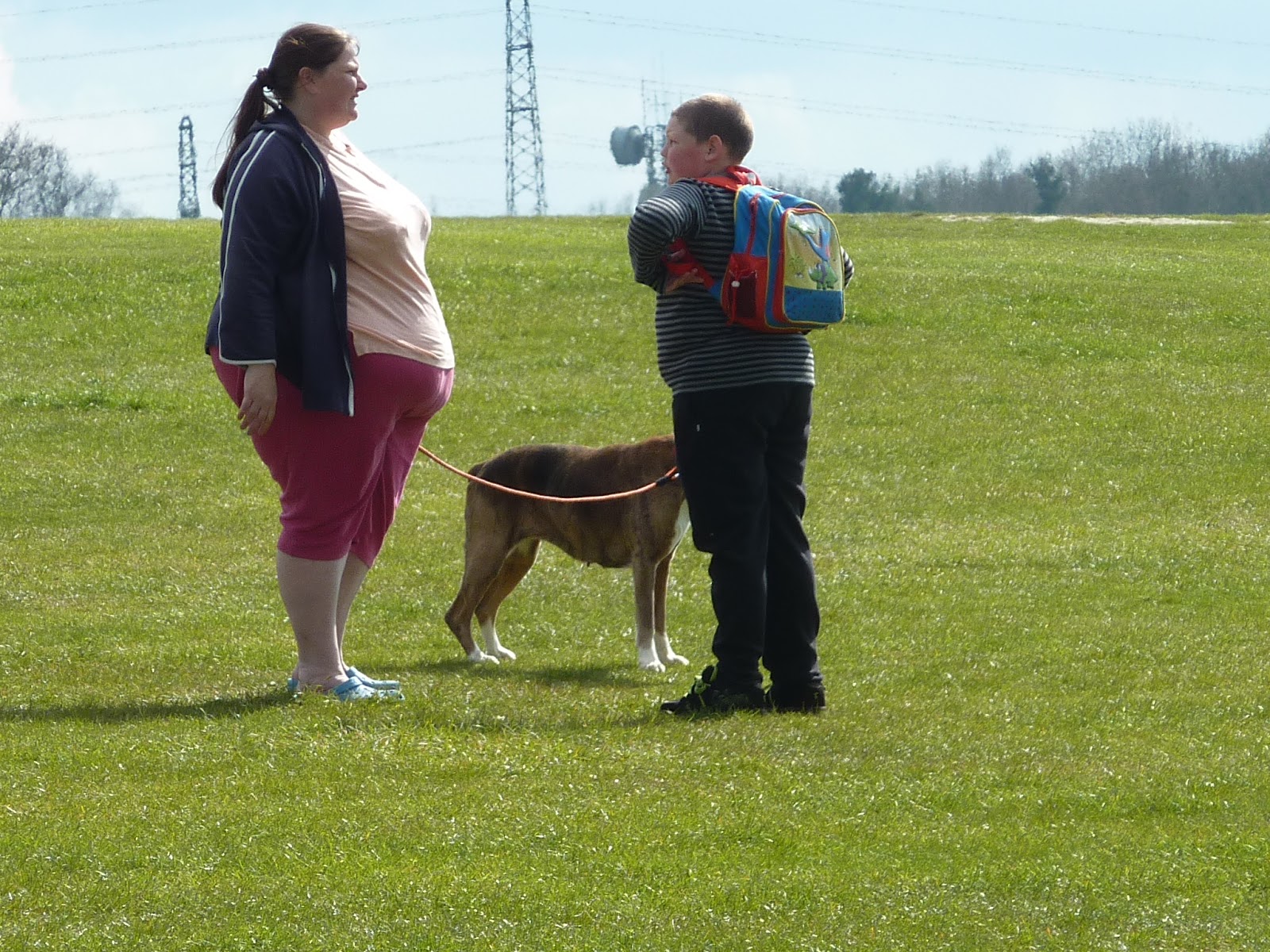
Perhaps even the dog looks overweight? 
Here in the UK the National Audit Office reckons the NHS spends £500M a year on obesity related problems.  By the time that's factored to include the impact on the wider economy, the figure grows to £2Bn.  By any measure that is a huge amount of money.

I want to bring some encouragement to the blogosphere world on the point of obesity.  There is a way out of this problem which includes changing lifestyles, changing the national diet, the way food and beverages are taxed (or not as the case may be) and offering real help that really works.  I'm not an expert on this, moreover I'm just an ordinary person but it is something that concerns me, having once weighed 13 stone 8lbs in 2003.  For the last few years I have been a steady 10 stone 7lbs (BMI 21.5) so perhaps I have had a narrow escape and a bit of an awakening.

The main thing is not to ponder the negative aspects of obesity too much, although these are important and I'm going to mention these below.  The main thing is to grasp the belief that obesity CAN be overcome, the result will be fantastic and if it applies to you, you will never want to go back to that old lifestyle again.  Please read that last sentence again and absorb it before you go any further.

Yesterday we were out and about; a normal Saturday afternoon thing for us.  We stopped and had a little snack at a "beauty spot" which was no big deal.  In fact, here's Hannah enjoying hers:


What sticks in my mind was seeing a woman on a nearby table.  Clearly obese she was eating a burger with all of the trimmings.   Perhaps she was eating then out of habit, perhaps out of seeking some comfort or maybe a whole load of other reasons.  While the food may have tasted nice to her, it could only have given her some brief pleasure, if anything at all.   She looked as if she was hating it and taking no pleasure from eating it, perhaps it was tinged with some guilt.

While obesity can take hold at any time in life, perhaps for many the middle-aged obesity problem is a big issue.  I mentioned earlier I was over weight a few years ago and thankfully never made it to the realms of obesity but it could so easily have been the case for me.  I remember it crept up on me.  We often joke about "married contentment" when we notice our friends becoming a little more cuddly and we've been the subject of that banter ourselves.  It is so easy for people in their 30s or 40s to continue eating as they did in the 20s but the waist line grows in such a gradual way it is never noticed until, well, you notice it with a shock.  The fact is, for many people, our metabolism changes alongside our lifestyle becoming more sedentary which in turns leads to those extra pounds and kilograms.

As I said earlier, there has to be that solid belief that it can be overcome; changes CAN be made which are effective and the effect will be so wonderful you will never want to return to those baggy clothes.  People who do lose that surplus weight have so much more energy and ability to get out there and have some enjoyment.  No more wheezing, panting or struggles in doing simple things.  Do remember as you improve your weight and fitness, the more you achieve the easier it becomes to achieve even more (does that make sense?).

We all know the basic reasons for obesity: the wrong foods in the wrong quantities and not enough physical activity.  Wrong foods mean, put simply, foods with too much sugar and fat.  Not enough physical activity means a sedentary lifestyle which does not include some kind of exercise which gets you out of breath 3 or 4 times a week.

In 2009 here in the UK it was reported that:

60% of adults were over weight (22% of men were obese, 24% of women were obese)
31% of children were over weight

Good things to look forward to by losing weight:

  • You will probably live longer and enjoy good overall health
  • You are less likely to suffer from diabetes and associated problems - eyesight, problems with feet and circulation etc
  • You are less likely to have heart disease
  • Your blood pressure will be normal
  • You will look good, feel more confident
  • Your mental health will be better with a better chance of avoiding depression, or anxiety problems
  • Your fertility will improve
  • You are less likely to suffer from certain cancers
  • You are less likely to suffer from arthritis, indigestion 
  • You won't snore as much


 Related: